Calgary homeowners planning a 2025 renovation are asking the same question: how much will asbestos removal actually cost? The answer depends on materials, access, and compliance obligations, but accurate budgeting starts with understanding how professional abatement is scoped in our city. From mandatory testing to final clearance, certified contractors follow a sequence that protects occupants and keeps permits moving.
1. Confirming asbestos before you price removal
Since the City of Calgary requires proof of hazardous materials testing on pre-1990 structures, your first cost will usually be sampling and laboratory analysis. Expect to invest $350–$650 for a site inspection and three to six bulk samples. Additional samples or rush analysis can raise the price to $900, especially when renovations involve multiple rooms or materials. Homeowners often book asbestos testing at the same time as overall renovation planning so permit applications are not delayed. Remember that negative lab results are valuable—you can proceed with demolition without costly containment.
Insurance claims or restoration projects after floods typically include emergency sampling. Crews stabilize the area, collect samples while wearing Type 3 PPE, and deliver results in 24 hours so adjusters can authorize work. Even when insurance covers the claim, the homeowner may be responsible for the testing deductible, so build that into your contingency fund.
2. Understanding the factors that drive Calgary abatement pricing
Once asbestos is confirmed, Calgary contractors price removal based on square footage, material type, containment complexity, and logistics. The majority of residential projects fall into the $18–$30 per square foot range. High-risk materials such as boiler insulation, sprayed fireproofing, or mechanical duct wrap may exceed $35 per square foot because they require more intensive decontamination. Projects in high-rise condos or downtown commercial towers often include premiums for freight elevators, after-hours work, and extended negative-air monitoring.
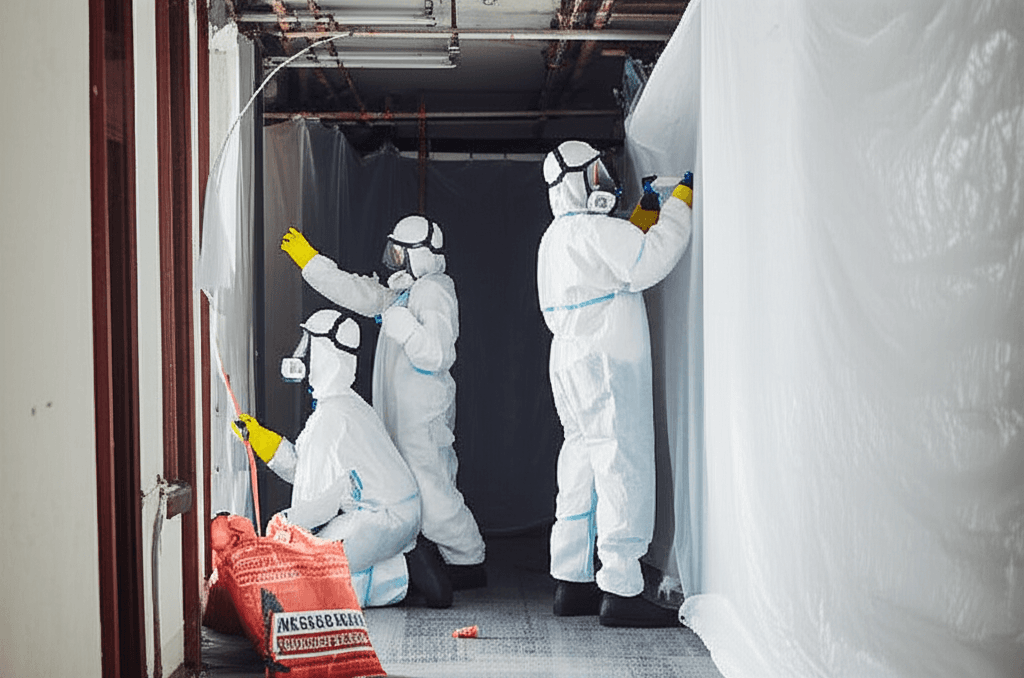
- •Containment design: Building a full poly enclosure with airlocks, negative air machines, and dedicated
power is labour intensive. Homes with open-to-below staircases or vaulted ceilings demand more material and set-up time.
- •Access and waste handling: Walk-out basements in communities like Panorama Hills are easier than
third-floor apartments in Mission. Crews must move sealed waste to the truck without contaminating common areas, often requiring lift rentals or coordinated elevator bookings.
- •Schedule constraints: Working evenings or weekends to avoid disrupting tenants adds overtime costs. Many
property managers in the Beltline pay a premium to ensure occupants return to work Monday morning.
Labour and consumables make up the bulk of the invoice, but homeowners should also expect to pay for industrial hygiene services. Third-party air monitoring typically costs $500–$800 per visit. At minimum you need final clearance testing; complex jobs may require daily air sampling to satisfy Alberta OH&S requirements.
3. Typical cost scenarios for Calgary homeowners
While every house is different, it helps to compare sample budgets. Removing asbestos textured ceiling from a 1,200-square-foot bungalow in Acadia might cost $14,000–$18,000. That budget includes testing, containment, removal, waste disposal, and two air samples. Removing vinyl asbestos floor tile and mastic from a 1970s kitchen generally ranges from $5,000–$8,000 depending on whether cabinets must be temporarily removed. Whole-home remediation prior to a major addition can run $25,000–$40,000 when multiple materials are involved.
Renovations that involve plumbing or HVAC upgrades frequently uncover asbestos duct wrap or boiler insulation. These mechanical components often sit in tight utility rooms. Contractors may need to dismantle equipment or install temporary shoring, increasing labour. The good news is that integrated teams like Makki Abatement can coordinate selective demolition and mechanical re-installation, saving homeowners from scheduling multiple trades.
4. Permitting, waste, and documentation fees
Calgary has strict documentation requirements to protect landfill workers and the public. Abatement contractors submit an Asbestos Management Form to the City and book disposal with the Shepard Landfill. These administrative steps usually appear as line items: expect $150–$250 for permit processing and $75–$150 per load for landfill surcharges. If you live outside the city limits in a community like Chestermere or Okotoks, your contractor may transport waste to Calgary, because not all regional facilities accept asbestos. Factor travel time into the overall project schedule.
Documentation is not just bureaucracy. Real estate transactions and insurance claims often require proof of abatement. Make sure your contractor provides a project binder that includes permits, waste manifests, daily log sheets, and final air sample reports. These documents demonstrate due diligence if you sell the property or pursue a renovation rebate.
5. Budgeting for rebuild and finishing costs
Asbestos removal is only one component of a renovation budget. Containment and removal expose framing, wiring, and insulation that must be rebuilt. Drywall repair, painting, flooring replacement, and trim carpentry can easily equal or exceed the abatement cost. Plan to engage your general contractor early so they can schedule trades immediately after clearance. Many Calgarians choose to integrate mold remediation or energy upgrades while walls are open, maximizing the value of the project.
For example, a homeowner in Calgary's core recently paired asbestos removal with new spray-foam insulation and high-efficiency ductwork. While their abatement invoice totalled $32,000, the overall renovation reached $95,000 once rebuild and upgrades were complete. Transparent budgeting helped them secure financing before demolition began.
6. How to keep your project on budget in 2025
The best way to control costs is to engage a contractor early, share drawings, and clarify your timeline. When crews can pre-book containment, waste trucks, and hygienists, they avoid rush premiums. Ask for a detailed scope of work that outlines square footage, material types, labour hours, equipment, and third-party testing. If you receive multiple bids, verify that each includes the same tasks so you're comparing apples to apples.
Homeowners can also reduce surprises by preparing the space. Remove furniture, draperies, and personal items before crews arrive. Confirm whether electricians or plumbers need to disconnect services. Coordinate with your neighbours if you share hallways or elevators; a little communication prevents delays on the first day of work.
7. Choosing a Calgary contractor you can trust
Look for companies with active Alberta OH&S certifications, liability insurance, and proven experience on projects similar to yours. Reviews from property managers, builders, and homeowners provide insight into responsiveness and cleanliness. Request references and ask how the contractor handled unexpected findings, such as discovering vermiculite insulation in the attic or additional asbestos behind shower walls. The most reliable teams are transparent about change orders and keep you informed at every step.
Makki Abatement's crews operate across the city and surrounding communities, providing integrated testing, removal, and selective demolition. When you're ready to discuss your project, contact us for a detailed estimate and a schedule tailored to your renovation goals.
Ready to start your asbestos removal project?
Request a free inspection or call 403-392-2803 to coordinate with Makki Abatement's certified team.