Every homeowner or contractor tackling a renovation in Calgary eventually encounters the question: do I need a permit for asbestos abatement? The answer is yes—when asbestos-containing materials will be disturbed, the City requires documentation, even if the overall building permit was issued months ago. Understanding the paperwork, timelines, and inspections helps avoid stop-work orders and keeps your project on track.
Why Calgary regulates asbestos removal
Asbestos fibres become airborne when disturbed, posing serious health risks. Calgary has thousands of homes and commercial buildings constructed before 1990 that still contain materials like vinyl floor tile, drywall compound, and mechanical insulation. To protect residents, workers, and landfill staff, the City mandates that any renovation or demolition involving asbestos must follow strict containment and disposal procedures. Permitting ensures that certified professionals—not untrained crews—handle these hazardous materials.
Alberta Occupational Health and Safety (OH&S) legislation also requires employers to prepare a hazard assessment and control plan before removing asbestos. Municipal permits align with these provincial rules, creating a paper trail that verifies safe practices. When a homeowner sells their property or submits insurance documentation, the permit record confirms that work was completed properly by a contractor such as Makki Abatement.
Key documents: Asbestos Management Form and scope of work
Calgary’s Building Services department uses the Asbestos Management Form to track projects. The form outlines the location of asbestos, planned abatement methods, disposal sites, and hygiene procedures. You must attach laboratory reports from an accredited facility—another reason to arrange asbestos testing before demolition. If your project spans multiple work areas, include a floor plan or annotated drawing that shows containment zones and access routes for waste removal.
A complete submission includes:
- •Asbestos Management Form (available through the City of Calgary ePermit portal)
- •Laboratory analysis confirming asbestos-containing materials
- •Detailed scope of work, including negative air calculations and decontamination procedures
- •Waste handling plan specifying the Shepard Landfill or alternate approved site
- •Names and certifications of the abatement contractor and hygienist
Once uploaded, Building Services typically reviews submissions within three to five business days. Rush reviews are possible for emergency situations, but you must call the permit office to explain the circumstance and provide proof of risk, such as a structural failure or flood. Planning ahead is far cheaper than paying crews to wait.
When separate permits are necessary
Even if you already have a building permit for your renovation, you may need to file additional documents when asbestos is discovered mid-project. The City treats hazardous material removal as a distinct phase because containment alters fire exits, ventilation, and access. Failing to submit the Asbestos Management Form can trigger a stop-work order. If that happens, crews must cease work immediately and scheduling the backlog becomes far more expensive.
Demolitions carry extra scrutiny. For full building demolition, you must submit an environmental report confirming asbestos, lead, and PCBs have been addressed. The City will not release a demolition permit without this documentation. Communities such as Calgary, Chestermere, and Cochrane have similar requirements, so keep paperwork organized if your project spans municipal boundaries.
What inspectors look for on site
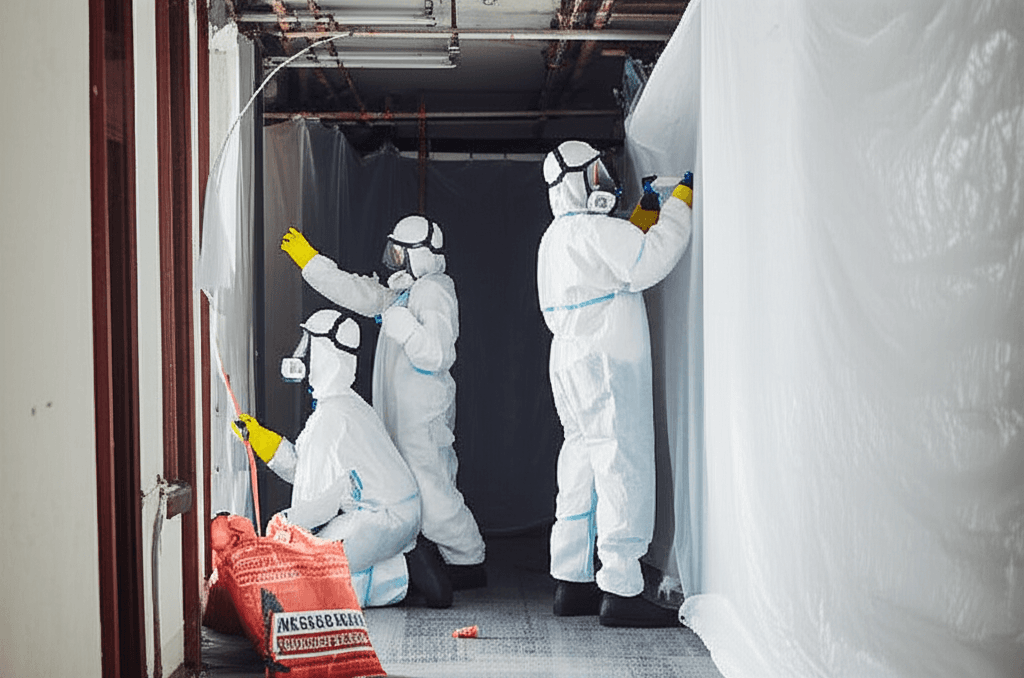
Building inspectors may visit during abatement or immediately after. They verify that containment, signage, and negative air machines match the approved plan. Inspectors also confirm that waste is double-bagged, labelled, and temporarily stored in a secure location before transport. Some projects require the inspector to witness clearance testing performed by an independent hygienist. Without that clearance, the permit stays open and you cannot proceed with rebuild activities.
Always keep copies of permits, lab reports, and daily log sheets on site. If an inspector arrives when the project manager is off site, another crew member should be able to retrieve the documentation immediately. Digital copies on a tablet are fine, as long as they’re accessible without an internet connection.
How professional contractors simplify the process
Experienced abatement companies manage permitting as part of their service. When you hire Makki Abatement, our team collects lab results, completes the paperwork, and uploads documents through the ePermit portal. We also schedule waste disposal and coordinate with hygienists for final air testing, ensuring that everything required for close-out is ready.
In addition, we educate homeowners about sequencing. For example, kitchen renovations in Altadore often involve both asbestos floor tile removal and wall demolition. We stage containment so demolition crews can move in immediately after clearance, reducing downtime. When selective demolition or mold remediation is required, our integrated teams manage each permit, saving you from juggling multiple contractors.
Frequently overlooked permit considerations
Utility shutoffs: If abatement impacts mechanical systems, schedule utility shutoffs with Enmax or ATCO. The City may ask for proof before issuing the permit.
Neighbour notification: Multi-family buildings and commercial towers often require notice to tenants. Some property managers won’t allow work to start without a copy of the permit and hygiene plan.
Working in neighbouring municipalities: Each city has its own forms. Makki Abatement regularly files documents with Okotoks, Airdrie, and Canmore. If you have properties in several jurisdictions, centralizing permit management avoids delays.
Record keeping for future sales: Keep permits and clearance reports for the life of the building. Buyers and mortgage brokers often request documentation to confirm the property is asbestos-free before finalizing financing.
Steps to stay compliant in 2025
- •Schedule asbestos testing early in project planning and keep digital copies of the lab report.
- •Engage a certified contractor that will prepare the Asbestos Management Form and upload it through ePermit.
- •Coordinate containment plans with your renovation team so trades understand timelines and access routes.
- •Ensure an independent hygienist is booked for final clearance testing and that results are shared with the City.
- •File all documentation—including waste manifests and clearance certificates—in a project binder for future reference.
Calgary’s permitting process may feel daunting, but it protects everyone involved and ultimately speeds up renovation timelines. By partnering with licensed professionals and staying organized, you can remove hazardous materials safely and move straight into rebuild mode. If you have questions about the process, reach out to our team for guidance or request a site visit through our contact page.
Ready to submit your documentation? Call Makki Abatement at (403) 617-0255 or explore our Calgary asbestos abatement services to get started.
Ready to start your asbestos removal project?
Request a free inspection or call 403-392-2803 to coordinate with Makki Abatement's certified team.