Commercial renovation and redevelopment projects in Calgary move quickly. General contractors juggle tight schedules, tenant expectations, and safety requirements. When asbestos is involved, the stakes rise even higher. This checklist helps Calgary contractors plan and execute commercial asbestos abatement with confidence, whether you manage a downtown tower, a retail fit out, or an industrial plant shutdown.
1. During tender and pre-construction
Review existing environmental reports. If the owner provides a hazardous materials survey, verify its currency and scope. Reports older than one year may not reflect recent tenant improvements. If documentation is missing, schedule asbestos testing immediately to avoid permit delays.
Clarify responsibilities in the contract. Determine whether the general contractor or owner will hire the abatement contractor. Many Calgary projects prefer a design-build approach where Makki Abatement joins the team early, providing budgets and phasing strategies that integrate with demolition and rebuild schedules.
Set realistic timelines. Abatement can take longer than demolition, especially in occupied buildings. Account for containment set-up, air monitoring, and clearance. Plan buffer days before follow-on trades such as electrical or mechanical contractors mobilize.
2. Before mobilization
Submit permits. File the City of Calgary Asbestos Management Form with lab reports, containment plans, and waste handling information. For projects in Calgary, Cochrane, or Airdrie, each municipality has its own submission portal. Keep copies of approvals on site.
Coordinate utilities and building operations. Arrange HVAC shutdowns, electrical lockouts, and fire alarm bypasses. Work with building engineers to maintain negative pressure without disrupting critical systems.
Communicate with tenants. Provide notice of work hours, elevator usage, and safety protocols. In downtown towers, consider staging containment overnight and performing removal during off-hours to minimize disruption.
3. Site setup
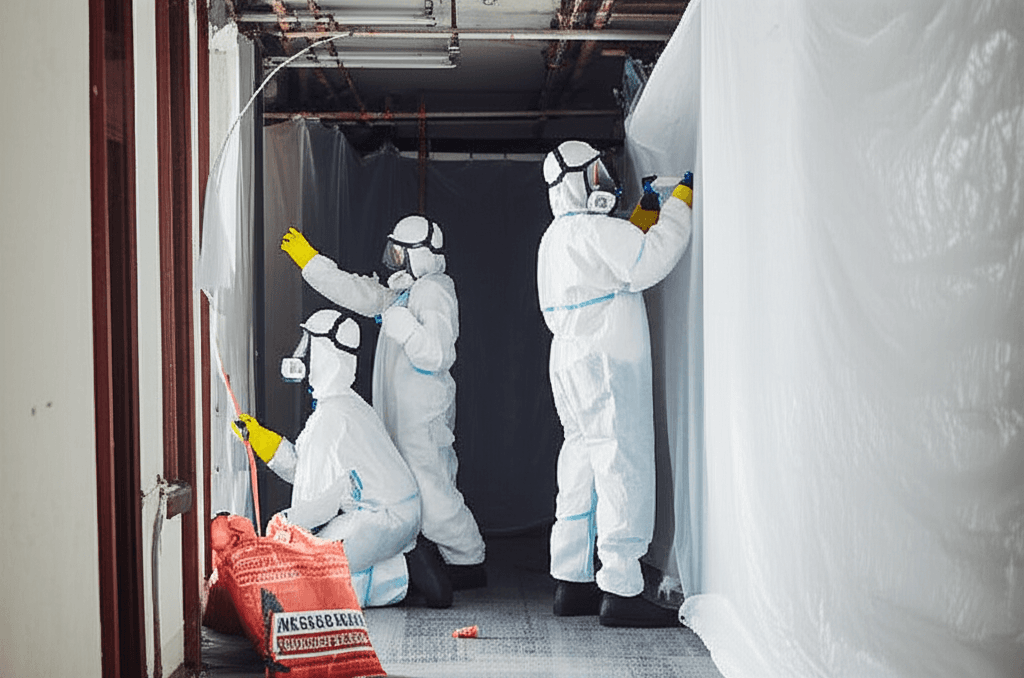
Confirm containment design. Abatement contractors should provide drawings showing poly barriers, negative air machine placement, and decontamination units. Review routes for waste removal and equipment access. Ensure signage clearly marks restricted zones.
Verify equipment and staffing. Check that HEPA scrubbers, negative air machines, and personal protective equipment are on site before work starts. Projects may require multiple crews to meet schedule milestones, especially when phasing across several floors.
Plan for waste logistics. Coordinate loading dock times with building management. Assign a staging area for sealed bags while waiting for transport to the Shepard Landfill. Maintain waste manifests for every load.
4. During abatement
Monitor progress daily. Request updates from the abatement supervisor, including photos, air-monitoring results, and percentage complete. Transparent reporting helps you adjust schedules and keep the owner informed.
Maintain site safety. Ensure the general contractor’s safety representative performs regular walk-throughs. Confirm that fire exits remain accessible, temporary lighting is adequate, and decontamination units function correctly.
Coordinate with other trades. If selective demolition or mechanical disconnects overlap with abatement, ensure only properly trained workers enter containment. Makki Abatement often integrates selective demolition crews once hazardous materials are removed to keep critical paths moving.
5. Clearance and turnover
Schedule air testing. Engage an independent hygienist to perform final air clearance. Some projects require daily background samples; others only need post-abatement tests. Provide power and access so the hygienist can complete their work quickly.
Complete close-out documentation. Collect air test certificates, waste manifests, site logs, and photographs. Package them in a turnover binder for the owner. These documents prove compliance with Alberta OH&S and municipal regulations.
Walk the space with the owner. After clearance, inspect containment removal, cleanliness, and readiness for rebuild. Address punch-list items immediately to avoid delaying tenant improvements.
6. Post-project review
Conduct a debrief with the owner and abatement contractor. Identify lessons learned, update your company’s procedures, and capture feedback for future tenders. Maintaining relationships with reliable abatement partners reduces risk on future projects across Calgary, Okotoks, and Canmore.
7. Additional coordination steps for Calgary projects
Document municipal communication. Keep a log of every interaction with the City of Calgary, Alberta Labour, and utility providers. If a project pauses for weather or tenant changes, detailed notes make it easier to restart permits or inspections without redoing paperwork. Storing correspondence in cloud folders lets traveling project managers respond quickly from the field.
Plan post-abatement build-back early. Share your as-built photos, clearance reports, and site measurements with drywall, mechanical, and electrical trades before containment comes down. When subcontractors review site conditions in advance, they can verify material orders and manpower. This proactive approach keeps projects like downtown lobby upgrades and airport hangar retrofits moving from abatement into selective demolition and rebuild without idle days.
Checklist summary
- •Confirm existing hazardous materials reports and schedule new testing if needed.
- •Define roles, responsibilities, and schedule buffers in the contract.
- •Submit permits and coordinate utilities before mobilization.
- •Review containment plans, staffing, and waste logistics during site setup.
- •Track daily progress, safety, and coordination during abatement.
- •Plan clearance testing and assemble close-out documentation.
- •Debrief and apply lessons learned to future projects.
Commercial asbestos abatement doesn’t have to derail your project. By following this checklist and partnering with experienced professionals, you can protect workers, tenants, and budgets. Makki Abatement provides integrated testing, removal, and demolition services tailored to Calgary’s commercial market. Contact us to discuss your upcoming project or explore our asbestos abatement solutions to keep your schedules on track.
Ready to start your asbestos removal project?
Request a free inspection or call 403-392-2803 to coordinate with Makki Abatement's certified team.