
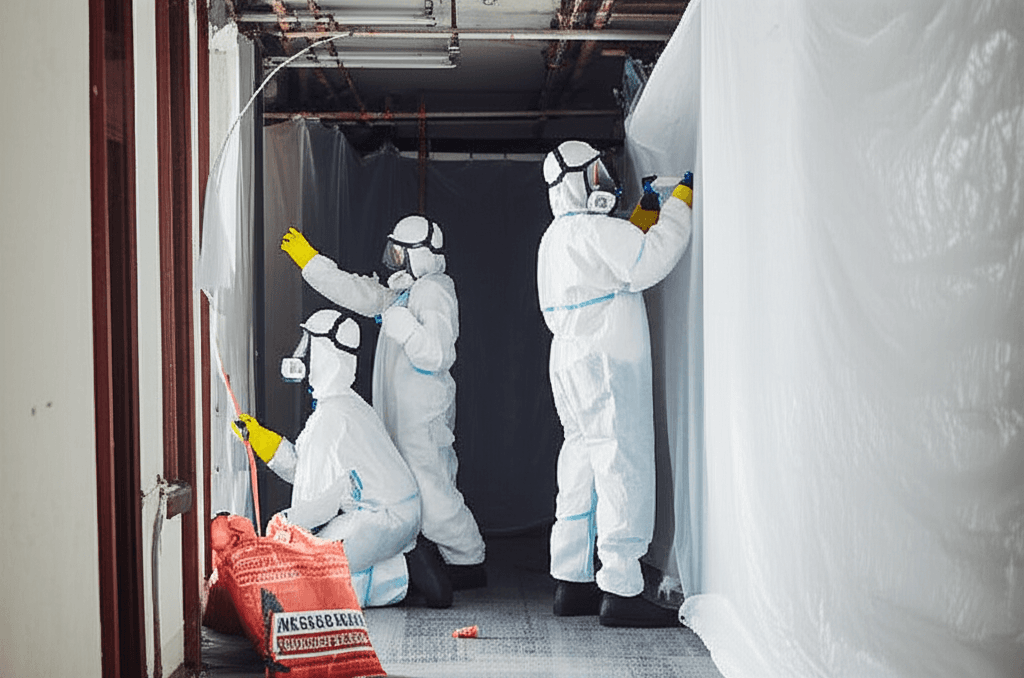
Mould and asbestos are two of the most concerning hazardous materials found in buildings, yet they're fundamentally different in nature, health risks, and remediation approaches.
Property owners often confuse these hazards or underestimate their distinct dangers. Understanding the differences between mould and asbestos is essential for proper identification, risk assessment, and choosing appropriate professional services.
This comprehensive guide explains what mould and asbestos are, how they differ in appearance and health impacts, identification methods, removal processes, costs, and when to seek professional help for each hazard.
What is mould?
Mould (also spelled "mold" in American English) is a type of fungus that grows in multicellular filaments called hyphae. Moulds are living organisms that reproduce through microscopic spores released into the air. Unlike plants, moulds cannot produce their own food through photosynthesis—instead, they obtain nutrients by decomposing organic matter.
How mould grows
Mould requires four basic conditions to grow:
- •Moisture: Water or high humidity (typically above 60% relative humidity)
- •Food source: Organic materials including wood, drywall paper, fabric, carpet, food, etc.
- •Oxygen: Mould is aerobic and requires oxygen to survive
- •Temperature: Most moulds thrive between 40-100°F (4-38°C), with optimal growth around 70-80°F (21-27°C)
When these conditions are met, mould spores (which are always present in the air) land on surfaces and begin growing within 24-48 hours. Mould spreads by releasing millions of spores that travel through the air to colonize new areas.
Common types of indoor mould
- •Cladosporium: Black or green mould growing on fabrics, wood, and HVAC systems
- •Penicillium: Blue or green mould often found on water-damaged materials and food
- •Aspergillus: Various colors, commonly found on dust, food, and building materials
- •Alternaria: Dark mould found in showers, bathtubs, and around windows
- •Stachybotrys chartarum (black mould): Greenish-black mould growing on high-cellulose, low-nitrogen materials like drywall and wood. Associated with serious health effects.
What is asbestos? (Quick review)
Asbestos is a group of six naturally occurring mineral fibers composed of silicate crystals. Unlike mould, asbestos is:
- •Inorganic: A mineral, not a living organism
- •Manufactured into products: Mined and processed into building materials, not naturally growing
- •Static: Doesn't spread or reproduce—remains where it was installed
- •Dangerous when disturbed: Poses minimal risk when intact but releases hazardous fibers when damaged
Asbestos was used extensively in construction from the late 1800s through the 1980s for insulation, fireproofing, and strengthening materials. Common asbestos types include chrysotile (white), amosite (brown), and crocidolite (blue).
For comprehensive information about asbestos, see our detailed guide on what asbestos is and how dangerous it is.
Key differences between mould and asbestos
1. Origin and nature
Mould:
- •Living organism (fungus)
- •Grows naturally when conditions are favorable
- •Reproduces and spreads through spores
- •Can appear in any building regardless of age
- •Organic and biodegradable
Asbestos:
- •Inorganic mineral
- •Manufactured into products and installed in buildings
- •Does not grow, spread, or reproduce
- •Only found in buildings constructed before ~1990
- •Inorganic and virtually indestructible
2. Appearance and identification
Mould:
- •Visible as fuzzy, slimy, or powdery patches
- •Various colors: black, green, white, orange, pink, purple
- •Often has musty, earthy odor
- •Appears on surfaces (walls, ceilings, floors, fabrics)
- •Grows in patterns radiating from moisture sources
- •Sometimes identifiable visually by experienced professionals
Asbestos:
- •Embedded in materials—not visible as fibers to naked eye
- •No distinct color (materials containing asbestos vary widely)
- •No odor
- •Hidden within building materials (insulation, tiles, cement, etc.)
- •Cannot be identified visually—requires laboratory testing
- •Microscopic fibers only visible when materials are disturbed
3. Location in buildings
Mould common locations:
- •Bathrooms (showers, tubs, sinks, toilets)
- •Basements and crawl spaces
- •Around windows and doors with condensation
- •Under sinks and around plumbing leaks
- •Attics with roof leaks or poor ventilation
- •Behind walls with water damage
- •HVAC systems and ductwork
- •Anywhere with water damage or high humidity
Asbestos common locations:
- •Vermiculite attic insulation
- •Popcorn ceiling texture
- •Vinyl floor tiles and adhesive
- •Drywall joint compound
- •Pipe and boiler insulation
- •Cement board siding and roofing
- •Fireproofing on structural steel
- •Typically in buildings constructed before 1990
4. Health risks
Mould health effects:
- •Allergic reactions: Sneezing, runny nose, red eyes, skin rash (most common)
- •Respiratory issues: Coughing, wheezing, throat irritation, breathing difficulty
- •Asthma triggers: Can trigger attacks in asthmatic individuals or cause asthma development
- •Infections: Rare but serious in immunocompromised individuals
- •Toxic effects: Some moulds (like Stachybotrys) produce mycotoxins causing more serious health effects
- •Acute symptoms: Often appear shortly after exposure (hours to days)
- •Reversible: Symptoms typically improve when exposure ends
Asbestos health effects:
- •Asbestosis: Progressive lung scarring (pulmonary fibrosis)
- •Mesothelioma: Aggressive cancer of lung/abdominal lining
- •Lung cancer: Increased risk, especially for smokers
- •Pleural diseases: Scarring and thickening of lung lining
- •Long latency: Diseases develop 10-50 years after exposure
- •No safe level: Even brief exposure can cause disease decades later
- •Irreversible: Asbestos fibers remain in lungs permanently; diseases have no cure
5. Testing and identification
Mould testing:
- •Visual inspection: Often identifiable by appearance and odor
- •Air sampling: Measures airborne spore concentrations
- •Surface sampling: Tape lifts or swabs identify specific mould types
- •Moisture meters: Detect hidden moisture promoting mould growth
- •Results timeline: Laboratory analysis typically 3-5 business days
- •DIY options: Home test kits available (though professional testing recommended)
Asbestos testing:
- •Visual inspection: Cannot reliably identify asbestos—lab testing required
- •Bulk sampling: Physical samples collected from suspect materials
- •Laboratory analysis: Polarized light microscopy (PLM) or transmission electron microscopy (TEM)
- •Results timeline: 24-48 hours for rush analysis, 3-5 days standard
- •Professional required: DIY testing not recommended due to fiber release risk
- •Air sampling: Only used during or after abatement for clearance testing
6. Removal and remediation
Mould remediation:
- •Source elimination: Fix water leaks and moisture sources first
- •Containment: Plastic sheeting and negative air pressure for large jobs
- •Removal methods: HEPA vacuuming, antimicrobial treatments, removing damaged materials
- •Disposal: Standard construction waste disposal (not hazardous waste)
- •Prevention focus: Controlling moisture prevents recurrence
- •DIY potential: Small areas (Large projects: Professional remediation recommended for >10 sq ft or toxic moulds
Asbestos removal:
- •Regulatory requirements: Strict permitting and notification requirements
- •Containment: Engineered negative-air enclosures with HEPA filtration mandatory
- •Removal methods: Wet methods, specialized tools, double-bagging of waste
- •Disposal: Hazardous waste disposal at approved asbestos landfills only
- •Clearance testing: Independent third-party air testing required before re-occupancy
- •DIY prohibited: Professional licensed contractors required (DIY is dangerous and often illegal)
- •Permanent solution: Once removed, asbestos doesn't return
7. Regulatory framework
Mould regulations:
- •No federal standards for mould exposure limits (in most countries)
- •Some states/provinces have guidelines but not strict regulations
- •Generally governed by building codes and landlord-tenant laws
- •Insurance policies may cover water damage leading to mould
- •Professional remediation not always legally required
Asbestos regulations:
- •Heavily regulated at federal, provincial/state, and municipal levels
- •Strict occupational exposure limits and work practice requirements
- •Mandatory permitting for removal projects
- •Licensed contractors required for most projects
- •Hazardous waste transport and disposal regulations
- •Significant penalties for non-compliance ($1,000-$1,000,000+ fines)
8. Costs
Mould remediation costs:
- •Small projects: $500-$1,500 (single room, Medium projects: $2,000-$6,000 (multiple rooms, 100-300 sq ft)
- •Large projects: $6,000-$20,000+ (whole home, extensive damage)
- •Factors: Affected area size, mould type, contamination extent, material replacement needs
Asbestos removal costs:
- •Small projects: $1,500-$3,500 (single room ceiling, limited floor tiles)
- •Medium projects: $3,500-$6,000 (multi-room, moderate materials)
- •Large projects: $6,000-$12,000+ (whole-home insulation, extensive abatement)
- •Factors: Material type (friable vs. non-friable), square footage, containment complexity, disposal costs
Can mould and asbestos occur together?
Yes, mould and asbestos commonly co-occur in buildings, particularly in these scenarios:
Water damage exposing asbestos
Water damage creating mould growth can simultaneously damage asbestos-containing materials:
- •Roof leaks damaging vermiculite attic insulation (which often contains asbestos)
- •Basement flooding affecting asbestos floor tiles and pipe insulation
- •Plumbing leaks deteriorating asbestos-containing drywall compound
- •Fire suppression water exposure impacting asbestos fireproofing
Older buildings with both hazards
Buildings constructed before 1990 likely contain asbestos and are also prone to mould due to:
- •Aging building envelope allowing water intrusion
- •Deteriorating plumbing and roofing systems
- •Inadequate ventilation promoting moisture accumulation
- •Original construction methods creating hidden moisture pathways
Complications when both are present
When mould and asbestos co-occur, remediation becomes more complex:
- •Sequencing challenges: Must address asbestos before aggressive mould remediation that might disturb materials
- •Cost implications: Paying for both mould and asbestos professionals simultaneously
- •Extended timelines: Sequential remediation extends total project duration
- •Containment coordination: Overlapping containment strategies for both hazards
- •Combined testing: Need both mould and asbestos testing before work begins
Proper approach when both are suspected
- •Stop water intrusion: Immediately address active leaks to prevent worsening
- •Test for both hazards: Conduct asbestos and mould testing before any remediation
- •Hire qualified professionals: Ensure contractors are certified for both mould and asbestos if both are present
- •Follow proper sequence: Generally, asbestos removal precedes mould remediation
- •Document thoroughly: Maintain records of all testing and remediation for both hazards
When to hire professionals: Mould vs. asbestos
Professional mould remediation needed when:
- •Affected area exceeds 10 square feet (EPA guideline)
- •Mould grows behind walls, in HVAC systems, or other hidden areas
- •Black mould (Stachybotrys) is suspected
- •Occupants have health issues potentially related to mould
- •Water damage involved sewage or contaminated water
- •Previous DIY remediation failed and mould returned
- •Property is rental/commercial (landlord/business liability)
Professional asbestos removal ALWAYS required for:
- •Any asbestos removal in commercial or rental properties (legal requirement)
- •Friable (easily crumbled) asbestos materials
- •Projects requiring permits (typically >1 sq m friable or >10 sq m non-friable)
- •Renovation or demolition projects disturbing asbestos materials
- •Damaged or deteriorating asbestos materials
- •Any quantity requiring professional judgment—DIY asbestos work is never recommended
For mould remediation services, see our professional mould abatement services. For asbestos removal, consult our complete asbestos removal guide.
Combined testing and remediation: What to expect
If you suspect both mould and asbestos in your property:
Initial assessment
- •Property age evaluation: Buildings pre-1990 should be tested for asbestos before any work
- •Visual inspection: Professional assessment identifies potential mould growth and asbestos locations
- •Moisture investigation: Identify all water sources and moisture accumulation areas
- •Documentation: Photograph all areas of concern
Testing phase
- •Asbestos sampling: Collect bulk samples from suspect materials (ceiling texture, floor tiles, insulation, etc.)
- •Mould sampling: Air and surface samples from affected and surrounding areas
- •Laboratory analysis: Both types of samples sent to accredited laboratories
- •Results review: Comprehensive report detailing findings and recommendations
Remediation planning
- •Scope development: Detailed plan addressing both hazards in proper sequence
- •Permitting: File required asbestos permits (mould typically doesn't require permits)
- •Containment design: Engineer containment meeting requirements for both hazards
- •Timeline estimation: Account for asbestos clearance before mould work begins
- •Cost estimation: Detailed quotes for both components of work
Remediation execution
- •Asbestos removal first: Complete all asbestos abatement and achieve clearance
- •Mould remediation second: Begin mould work only after asbestos clearance confirmed
- •Moisture elimination: Fix all water sources to prevent mould recurrence
- •Final verification: Post-remediation testing for both hazards if required
- •Documentation: Complete records for insurance, property files, and future reference
Prevention strategies
Preventing mould growth
- •Control moisture: Keep indoor humidity below 50%, fix leaks promptly
- •Improve ventilation: Use exhaust fans in bathrooms and kitchens, ensure attic ventilation
- •Monitor problem areas: Regularly inspect basements, crawl spaces, and around windows
- •Clean and maintain: Regular cleaning prevents mould establishment
- •Quick response: Dry water-damaged areas within 24-48 hours
Managing asbestos risk
- •Test before renovation: Always test pre-1990 buildings before any work
- •Leave intact materials alone: Undisturbed asbestos poses minimal risk
- •Monitor condition: Inspect known asbestos materials for damage or deterioration
- •Document locations: Maintain records of asbestos locations for future work
- •Plan for removal: Budget for professional abatement during major renovations
Frequently asked questions
Can mould testing detect asbestos?
No. Mould and asbestos require completely different testing methods. Mould testing identifies fungal species through culture or microscopy of spores. Asbestos testing analyzes mineral fiber content using specialized microscopy techniques. Always conduct separate testing for each hazard.
Is black mould as dangerous as asbestos?
While "black mould" (Stachybotrys chartarum) can cause serious health effects, it's generally less dangerous than asbestos. Black mould causes acute symptoms (allergies, respiratory issues, mycotoxin exposure) that typically improve when exposure ends.
Asbestos causes fatal diseases (mesothelioma, lung cancer) that develop decades after exposure and have no cure. Both require professional remediation, but asbestos poses more severe long-term health risks.
Can the same contractor handle both mould and asbestos?
Some contractors are certified for both mould remediation and asbestos abatement, but many specialize in one or the other. When both hazards are present, you may need separate contractors with appropriate certifications for each. Ensure any contractor you hire has specific certifications for the work they'll perform.
Does homeowners insurance cover mould and asbestos removal?
Coverage varies by policy and circumstances. Mould remediation is often covered if it results from a sudden, covered event (burst pipe, storm damage) but not from long-term neglect or maintenance issues. Asbestos removal is typically not covered unless it's directly related to a covered loss (fire, storm). Review your specific policy and consult your insurance provider before assuming coverage.
How long does combined mould and asbestos remediation take?
Combined projects typically take 2-4 weeks from initial testing through final completion. Timeline breakdown: asbestos testing (1-3 days for results), mould testing (3-5 days for results), asbestos removal (1-3 days to 1 week), asbestos clearance testing (1-2 days for results), mould remediation (2-5 days), final verification. Complex projects may take longer.
Conclusion: Understanding both hazards
While mould and asbestos are both serious hazards found in buildings, they differ fundamentally in nature, health risks, identification, and remediation approaches.
Mould is a living organism that grows in response to moisture, causes primarily acute respiratory symptoms, and can sometimes be addressed through DIY methods for small areas. Asbestos is an inorganic mineral embedded in building materials that causes fatal diseases decades after exposure and always requires professional removal.
The key takeaways:
- •Mould is a fungus that grows; asbestos is a mineral that was manufactured into products
- •Both pose serious health risks but through different mechanisms and timelines
- •Testing requirements and methods differ completely between the two
- •Professional remediation is recommended for mould (>10 sq ft) and required for asbestos (always)
- •Both can co-occur in older buildings, particularly after water damage
- •Proper sequencing (asbestos first, then mould) is critical when both are present
If you suspect either mould or asbestos in your property, professional testing is the first step. Never disturb suspected materials until proper testing confirms their identity and qualified professionals develop a remediation plan.
Additional resources:
Need professional mould remediation?
Request a mould inspection or call 403-392-2803 to coordinate with Makki Abatement's certified team.