
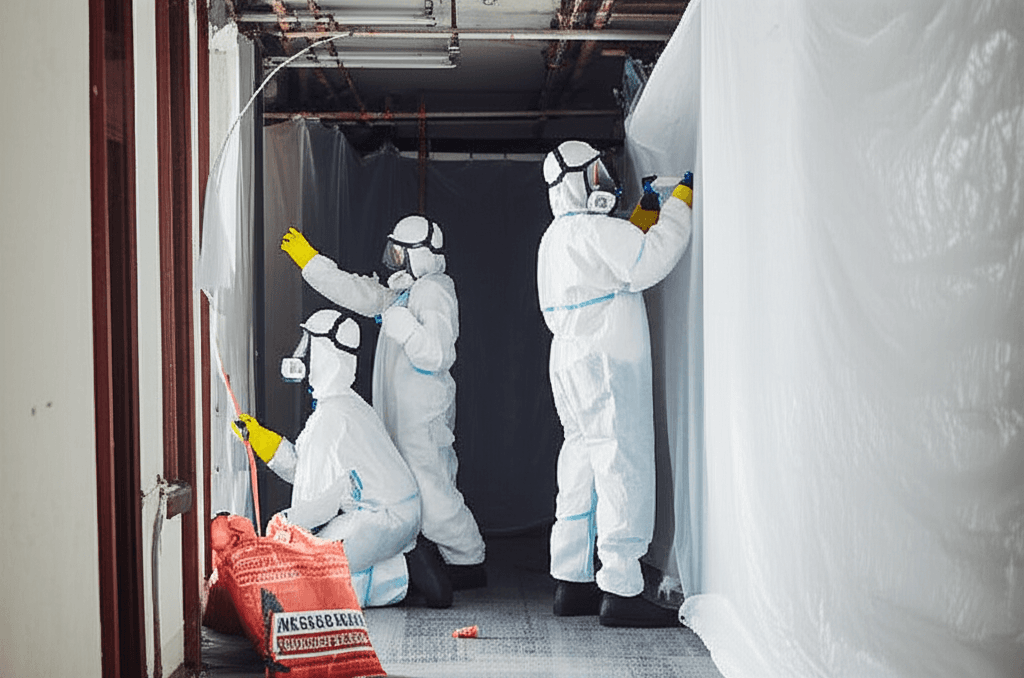
Asbestos is one of the most dangerous building materials ever used, responsible for thousands of preventable deaths each year.
Despite being banned or heavily restricted in most developed countries, asbestos remains present in millions of buildings constructed before 1990. Understanding what asbestos is, why it's hazardous, and the serious health consequences of exposure is essential for anyone living in, working in, or renovating older properties.
This comprehensive guide explains the science behind asbestos, its health risks, who's at greatest danger, and how to protect yourself and your family from this silent killer.
What is asbestos?
Asbestos is not a single material but rather a group of six naturally occurring silicate minerals composed of thin, fibrous crystals. These minerals form in metamorphic and ultramafic rocks and have been mined for commercial use for over 4,000 years, though widespread industrial use began in the late 1800s.
The six types of asbestos
Asbestos minerals are divided into two main groups based on their crystal structure:
Serpentine group:
- •Chrysotile (white asbestos): The most common form, accounting for approximately 95% of all asbestos used globally. Features curly, flexible fibers that can be woven.
Found extensively in building materials including insulation, roofing, floor tiles, and cement products. While considered "less dangerous" than amphiboles, chrysotile still causes serious diseases and is classified as a Group 1 carcinogen.
Amphibole group:
- •Amosite (brown asbestos): The second most common commercial form. Features straight, brittle fibers that are particularly dangerous when inhaled. Used primarily in cement sheets, pipe insulation, ceiling tiles, and thermal insulation products.
- •Crocidolite (blue asbestos): Considered the most dangerous form due to extremely thin, sharp fibers that penetrate deep into lung tissue. Used in specialized insulation products, cement pipes, and some roofing materials. Responsible for the highest rates of mesothelioma.
- •Tremolite: Not commercially mined but occurs as a contaminant in talc, vermiculite, and other minerals. Found in vermiculite insulation from Libby, Montana (Zonolite brand).
- •Anthophyllite: Rarely used commercially, sometimes found as a contaminant in talc and other minerals.
- •Actinolite: Rarely used commercially, occasionally found as a contaminant in vermiculite and talc products.
Why asbestos was considered a "miracle mineral"
Asbestos became ubiquitous in construction and industry due to remarkable physical properties:
- •Heat resistance: Withstands temperatures exceeding 1,000°F (538°C) without degradation, melting, or catching fire
- •Chemical inertness: Resists acids, bases, and most chemical reactions, preventing corrosion and degradation
- •Tensile strength: Extremely strong and durable, resisting physical stress and wear
- •Flexibility: Can be woven into fabrics, mixed into cement, or sprayed onto surfaces
- •Sound absorption: Excellent acoustic dampening properties for noise reduction
- •Electrical resistance: Effective insulation for electrical systems
- •Affordability: Abundant natural deposits made asbestos inexpensive to mine and process
These properties made asbestos the material of choice for insulation, fireproofing, soundproofing, and strengthening countless products from the late 1800s through the 1980s.
The hidden danger: Asbestos fiber structure
What makes asbestos uniquely dangerous is its microscopic fiber structure. Each visible asbestos fiber is actually a bundle containing hundreds of thousands of microscopic fibrils—individual filaments too small to see with the naked eye. These fibrils measure:
- •Length: 5-50 micrometers (0.005-0.05 millimeters)
- •Diameter: 0.01-1 micrometer (0.00001-0.001 millimeters)
- •Size comparison: 50-3,000 times thinner than a human hair
When asbestos materials are disturbed—through deterioration, demolition, cutting, sanding, or other physical contact—these microscopic fibrils separate and become airborne. Their small size allows them to:
- •Remain suspended in air for hours or days
- •Penetrate deep into lungs when inhaled
- •Bypass the body's natural defense mechanisms (cilia, mucus)
- •Lodge permanently in lung tissue
- •Trigger inflammation and cellular damage
Unlike other dust particles that can be expelled through coughing or filtered by airways, asbestos fibers are:
- •Biopersistent: Cannot be broken down or removed by the body
- •Sharp and needle-like: Physically pierce and damage cellular tissue
- •Chemically reactive: Generate free radicals causing DNA damage
- •Immunogenic: Trigger chronic inflammation leading to disease
How dangerous is asbestos? Understanding the health risks
Asbestos is classified as a Group 1 carcinogen by the International Agency for Research on Cancer (IARC)—the highest classification, reserved for substances with sufficient evidence of causing cancer in humans. It joins tobacco smoke, plutonium, and formaldehyde in this category.
There is no safe level of asbestos exposure
This is a critical fact that cannot be overstated: There is no known safe level of asbestos exposure. While higher cumulative exposure increases disease risk, even brief, low-level exposure can cause disease decades later. Key exposure facts:
- •Single fiber inhalation can initiate disease processes
- •Risk increases with exposure duration and concentration
- •Diseases typically develop 10-50 years after initial exposure
- •Short-term, high-intensity exposure carries similar risks to long-term, low-level exposure
- •No medical treatment can remove asbestos fibers once inhaled
Asbestos-related diseases
Asbestos exposure causes several serious, often fatal diseases:
1. Asbestosis
Asbestosis is a chronic, progressive lung disease caused by inhaling asbestos fibers that scar lung tissue (pulmonary fibrosis).
How it develops: Asbestos fibers lodged in lung tissue trigger chronic inflammation and scarring. Over years or decades, scar tissue accumulates, reducing lung elasticity and capacity.
Symptoms:
- •Shortness of breath, especially during physical activity
- •Persistent dry cough
- •Chest tightness and pain
- •Crackling sound in lungs when breathing (rales)
- •Clubbing of fingers and toes in advanced cases
- •Reduced lung capacity and oxygen levels
Prognosis: No cure exists. Treatment focuses on symptom management and preventing progression. Severe cases require supplemental oxygen or lung transplantation. Median survival after diagnosis ranges from 5-10 years, depending on exposure level and disease severity.
Latency period: Typically develops 10-40 years after initial exposure, usually requiring cumulative exposure over several years.
2. Mesothelioma
Mesothelioma is an aggressive, almost always fatal cancer affecting the mesothelium—the protective lining surrounding the lungs, abdomen, or heart.
How it develops: Asbestos fibers penetrate deep into lung tissue and migrate to the pleural lining (lung covering), peritoneum (abdominal lining), or pericardium (heart lining). Over decades, these fibers cause genetic mutations leading to malignant cell growth.
Types:
- •Pleural mesothelioma (75-80% of cases): Affects lung lining, causing chest pain, breathing difficulty, and fluid buildup
- •Peritoneal mesothelioma (10-20% of cases): Affects abdominal lining, causing abdominal pain, swelling, and digestive issues
- •Pericardial mesothelioma (1% of cases): Affects heart lining, causing chest pain and heart complications
- •Testicular mesothelioma ( Affects lining of testes
Symptoms:
- •Persistent chest or abdominal pain
- •Shortness of breath and difficulty breathing
- •Chronic cough, sometimes with blood
- •Unexplained weight loss
- •Fatigue and weakness
- •Fluid buildup in chest or abdomen
Prognosis: Mesothelioma is extremely difficult to treat and almost always fatal. Median survival is 12-21 months after diagnosis. Five-year survival rate is approximately 10%. Treatment includes surgery, chemotherapy, and radiation, but is primarily palliative.
Latency period: Typically develops 20-50 years after exposure. Most patients are diagnosed between ages 50-70.
Asbestos connection: Approximately 80% of mesothelioma cases are directly attributable to asbestos exposure. The disease is so rare in the general population that a mesothelioma diagnosis almost always indicates asbestos exposure.
3. Lung cancer
Asbestos exposure significantly increases lung cancer risk, particularly for smokers.
How it develops: Asbestos fibers cause direct DNA damage in lung cells and trigger chronic inflammation that promotes tumor development.
Symptoms:
- •Persistent cough that worsens over time
- •Chest pain that intensifies with deep breathing
- •Shortness of breath and wheezing
- •Coughing up blood (hemoptysis)
- •Hoarseness and voice changes
- •Unexplained weight loss and fatigue
Prognosis: Five-year survival rates vary from 5-60% depending on cancer stage at diagnosis and treatment response. Early detection significantly improves outcomes.
Latency period: Typically develops 10-30 years after exposure.
Smoking synergy: Asbestos exposure combined with smoking creates a synergistic effect—not just additive, but multiplicative. Smokers exposed to asbestos have 50-90 times greater lung cancer risk than non-smokers with no exposure.
4. Pleural diseases
Asbestos causes several non-malignant pleural (lung lining) conditions:
- •Pleural plaques: Calcified deposits on pleural lining. Usually asymptomatic but indicate asbestos exposure. Present in 50% of people with occupational exposure.
- •Pleural thickening: Scarring and thickening of pleural lining causing breathing difficulty and reduced lung capacity. Can be diffuse (widespread) or localized.
- •Pleural effusion: Fluid buildup between lung and chest wall causing shortness of breath, chest pain, and cough. Can be benign or malignant.
- •Atelectasis: Lung tissue collapse due to pleural scarring and fluid accumulation.
Prognosis: While not cancerous, pleural diseases cause significant breathing difficulties and reduced quality of life. They also indicate increased risk for developing asbestosis, mesothelioma, or lung cancer.
5. Other cancers linked to asbestos
Emerging research links asbestos to additional cancers:
- •Laryngeal cancer: Cancer of the voice box, with sufficient evidence of asbestos causation
- •Ovarian cancer: Linked to asbestos exposure, particularly from talc contaminated with asbestos
- •Colorectal cancer: Some evidence of increased risk with asbestos exposure
- •Stomach cancer: Possible association with asbestos ingestion from contaminated food/water
- •Pharyngeal and esophageal cancers: Limited evidence of association
Who is at risk of asbestos exposure?
While occupational exposure historically posed the greatest risk, anyone can encounter asbestos:
High-risk occupations (historical and current)
- •Construction and demolition workers: Encounter asbestos in older buildings during renovation and demolition
- •Asbestos miners and millers: Directly handled raw asbestos (mining largely ceased in developed countries)
- •Shipyard workers: Ships built before 1980s contain extensive asbestos insulation
- •Industrial workers: Refineries, power plants, manufacturing facilities used asbestos extensively
- •Automotive mechanics: Brake pads and clutches contained asbestos through the 1990s
- •Plumbers and pipefitters: Worked with asbestos pipe insulation and joint materials
- •Electricians: Encountered asbestos in wiring insulation and electrical panels
- •HVAC technicians: Worked with asbestos duct insulation and gaskets
- •Firefighters: Exposed during building fires and rescue operations
Non-occupational exposure risks
- •Homeowners and DIY renovators: Disturbing asbestos during home improvement without proper protection
- •Family members (secondary exposure): Exposure from asbestos fibers brought home on workers' clothing, equipment, and vehicles
- •Building occupants: Long-term low-level exposure from deteriorating materials in homes, schools, and offices
- •Environmental exposure: Living near asbestos mines, processing facilities, or natural deposits
- •Children: Particularly vulnerable due to developing respiratory systems and longer time for disease development
Statistics that demonstrate asbestos danger
- •Global deaths: 255,000+ deaths annually worldwide from asbestos-related diseases (WHO estimate)
- •North American impact: 12,000-15,000 deaths annually in the United States; 2,000+ deaths annually in Canada
- •Mesothelioma rates: 3,000+ new cases annually in the US; 500+ annually in Canada
- •Latency period: Average 20-50 years from exposure to disease development
- •Survival rates: Mesothelioma five-year survival: ~10%; lung cancer five-year survival: 5-60% depending on stage
- •Economic burden: Billions in annual healthcare costs, lost productivity, and litigation
How asbestos exposure occurs
Understanding exposure mechanisms helps you protect yourself and your family:
Inhalation (primary route)
Breathing airborne asbestos fibers is the main exposure route. Fibers become airborne when:
- •Asbestos materials are cut, sanded, drilled, or demolished
- •Materials deteriorate due to age, water damage, or physical stress
- •Vibrations from nearby construction disturb materials
- •HVAC systems circulate fibers from contaminated areas
- •Cleaning activities (sweeping, vacuuming) re-suspend settled fibers
Ingestion (secondary route)
Swallowing asbestos fibers can occur through:
- •Eating or drinking while handling asbestos without proper decontamination
- •Contaminated water from asbestos-cement pipes
- •Transfer from hands to mouth
While less dangerous than inhalation, ingested asbestos may contribute to gastrointestinal cancers.
Factors affecting exposure risk
- •Fiber concentration: Higher airborne fiber levels increase exposure and risk
- •Exposure duration: Longer exposure periods accumulate more fibers in lungs
- •Fiber type: Amphibole fibers (amosite, crocidolite) are more dangerous than chrysotile
- •Fiber size: Thinner, longer fibers penetrate deeper into lungs
- •Individual susceptibility: Genetics, smoking status, and overall health affect disease risk
Protecting yourself from asbestos exposure
If you suspect asbestos in your property
- •Don't disturb it: Leave suspected materials alone—asbestos in good condition poses minimal risk when undisturbed
- •Get professional testing: Only laboratory analysis can confirm asbestos presence—visual identification is unreliable
- •Document locations: Create a record of suspected materials for future reference and property transactions
- •Monitor condition: Inspect materials periodically for damage, deterioration, or disturbance
- •Plan ahead: Test before any renovation or demolition work
If you must work around asbestos
- •Hire certified professionals: Never attempt DIY asbestos removal
- •Avoid exposure: Vacate the property during professional removal
- •Follow contractor guidance: Comply with all safety recommendations and re-occupancy restrictions
- •Verify clearance: Ensure independent third-party testing confirms safe air quality before returning
If you've been exposed
- •Inform your doctor: Disclose any known or suspected asbestos exposure during medical visits
- •Get medical monitoring: Regular chest X-rays and lung function tests can detect disease early
- •Don't smoke: Eliminate smoking to dramatically reduce cancer risk
- •Watch for symptoms: Report any breathing difficulties, persistent cough, or chest pain immediately
The bottom line: Why asbestos is so dangerous
Asbestos is dangerous because it combines multiple lethal characteristics:
- •Microscopic and invisible: Fibers are too small to see, making exposure undetectable without monitoring
- •Biopersistent: Once inhaled, fibers remain in lungs permanently—the body cannot remove them
- •Carcinogenic: Causes multiple types of cancer through DNA damage and chronic inflammation
- •Long latency: Diseases develop 10-50 years after exposure, when prevention is no longer possible
- •No cure: Asbestos diseases have no cure—treatment is primarily palliative
- •No safe level: Even brief, low-level exposure can cause fatal disease decades later
- •Ubiquitous presence: Millions of buildings still contain asbestos, creating ongoing exposure risk
These factors make asbestos one of the most dangerous substances ever used in construction. The only effective protection is complete avoidance of exposure through professional testing, proper containment, and certified removal.
Taking action: What to do next
If you own or occupy a building constructed before 1990:
- •Get professional testing: Identify asbestos locations before any renovation or disturbance
- •Create an asbestos management plan: Document locations, condition, and plans for monitoring or removal
- •Hire certified contractors: Use only qualified professionals for any asbestos work
- •Educate occupants: Ensure everyone knows not to disturb suspected materials
- •Plan for removal: Budget for professional abatement during future renovations
For comprehensive information about professional asbestos removal, see our complete asbestos removal guide. If you need removal services, find qualified contractors through our guides on asbestos removal in Calgary or finding asbestos removal near you.
Conclusion: Understanding the asbestos threat
Asbestos is a naturally occurring mineral that became one of the most dangerous substances ever used in construction. Its microscopic fibers cause fatal diseases including asbestosis, mesothelioma, and lung cancer—diseases with no cure and long latency periods that make early exposure difficult to detect until it's too late.
There is no safe level of asbestos exposure. The only effective protection is avoiding disturbance of asbestos-containing materials and using certified professionals for all testing and removal. While asbestos in good condition poses minimal risk when left undisturbed, deteriorating materials or renovation projects require immediate professional intervention.
Understanding what asbestos is and how dangerous it is empowers you to make informed decisions that protect your health and your family's wellbeing. Don't take chances with asbestos—the potential consequences are simply too severe.
Additional resources:
Ready to start your asbestos removal project?
Request a free inspection or call 403-392-2803 to coordinate with Makki Abatement's certified team.